 Top Trending
"What Have We Got to Lose?" a 71-Year-Old Wrote Under This One-Ounce Oregon Bottle. I Read the Label, Five Herbs' Worth of Trials and All 23 Reviews to Answer Him.
One squeeze of the cap into two ounces of water, two or three times a day. It's bitter, it's mostly alcohol and water, and the label gives one number for five herbs. What that number buys you, what it doesn't, and what a retired couple actually risks by trying it.

This is a paid advertisement. Sponsored by Herb Pharm, LLC.
Neil Carrow is the pen name of this desk. The customers quoted on this page are real; their reviews are public on the seller's site and were read through the seller's own review system on September 5, 2026. I haven't met them and know nothing about them beyond what they wrote. The small photos beside their reviews are illustrations, not the reviewers. Everything about the product, from the ingredient panel to the return policy, comes from the seller's listing, the seller's photograph of the label and the seller's policy pages, checked the same day.
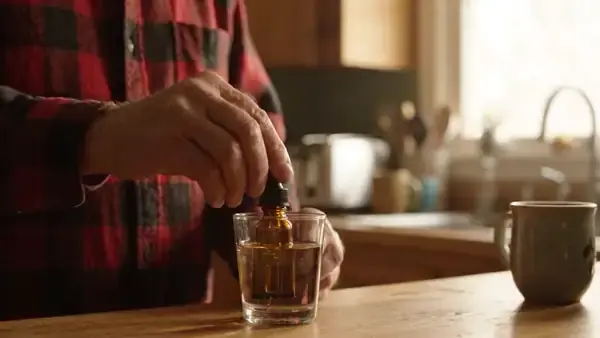
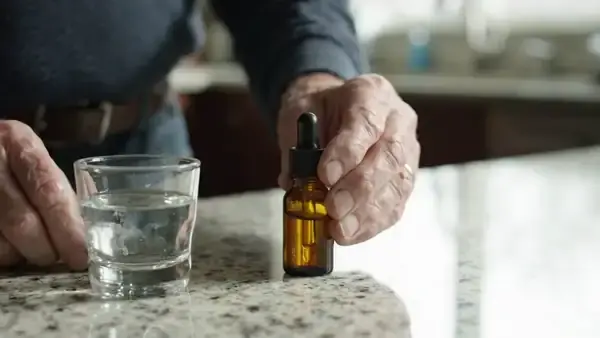
The whole gesture takes about two seconds, and I want you to see it before I say a word about plants.
You shake a small amber bottle.
You unscrew the black cap, squeeze the rubber bulb once, and let the drops fall into two ounces of water.
You drink it. It's bitter. There's a taste of rosemary at the end.
Then you go back to whatever you were doing.
Two or three times a day, between meals.
That's it. That's the product.
A gesture that small is easy to keep and easy to fool yourself about, and this page is about the difference.
In March, a man wrote a review of this bottle on the seller's site.
He said he and his wife were both taking it.
He said they were 71 and 72.
And he ended with a line I haven't been able to put down since.
"What have we got to lose?"
I don't know Kenneth W. I know eleven sentences he wrote.
He didn't ask the question to be answered. He asked it the way you shrug at the hardware store.
I'm going to answer it anyway, properly, because it's the right question, and because I read labels for a living.
I read the label before the listing.
I read the trials behind each of the five plants on it.
I read the shipping page, the return page and the contact page, which almost nobody does.
And I read all twenty-three reviews, including the two that gave it four stars and the one that gave it three.
What I found is a real bottle from a real company with a phone number, five real plants, one honest number, and a question worth answering slowly.
The question"What Have We Got to Lose?" Is the Right Question. The Honest List Follows.
Let's do the losing side first, because it's the side that usually gets skipped.
You lose the price of a one-ounce bottle.
It's on the seller's page, not here, because prices change and I won't print one that goes stale.
The one-ounce size sits below the seller's free-shipping line, so on its own you'll pay shipping too.
You lose about two weeks of small bitter sips.
The label says about 42 squeezes per bottle.
At three a day, that's fourteen days. At two, it's three weeks.
The seller's own picture says "up to a three-week supply," which is true only if you take it twice.
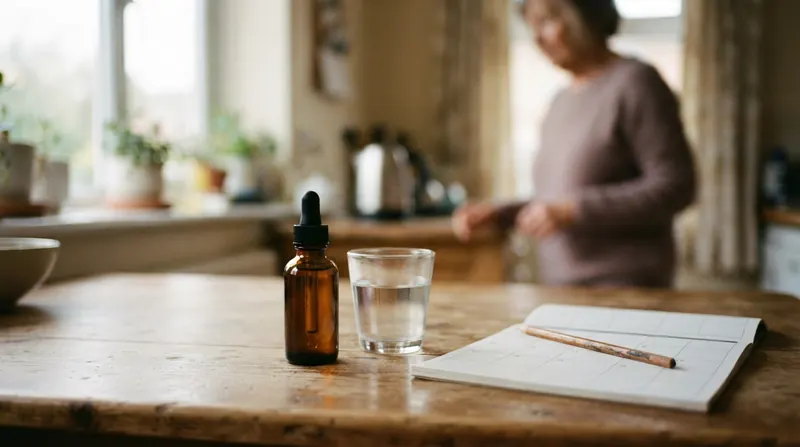
You take in a little alcohol.
This is an alcohol extract. The label says 56 to 66 percent cane alcohol.
A squeeze is 0.7 milliliters, so you're drinking about 0.4 milliliters of alcohol, diluted in two ounces of water.
That's less than a sip of wine. It's still alcohol, and I'll come back to it, because for some readers that settles the question.
And you lose the chance of a refund.
The seller's return page offers a replacement or a store credit within thirty days, with an authorization number you have to ask for first.
It doesn't say refund.
So the honest answer to "what have we got to lose" is: the price of a bottle, some shipping, a bitter sip, a little alcohol, and two weeks.
Now the other side of the ledger, which is longer and needs the label.
The bottleOne Ounce, Five Names, One Number
Here's what's on the counter.
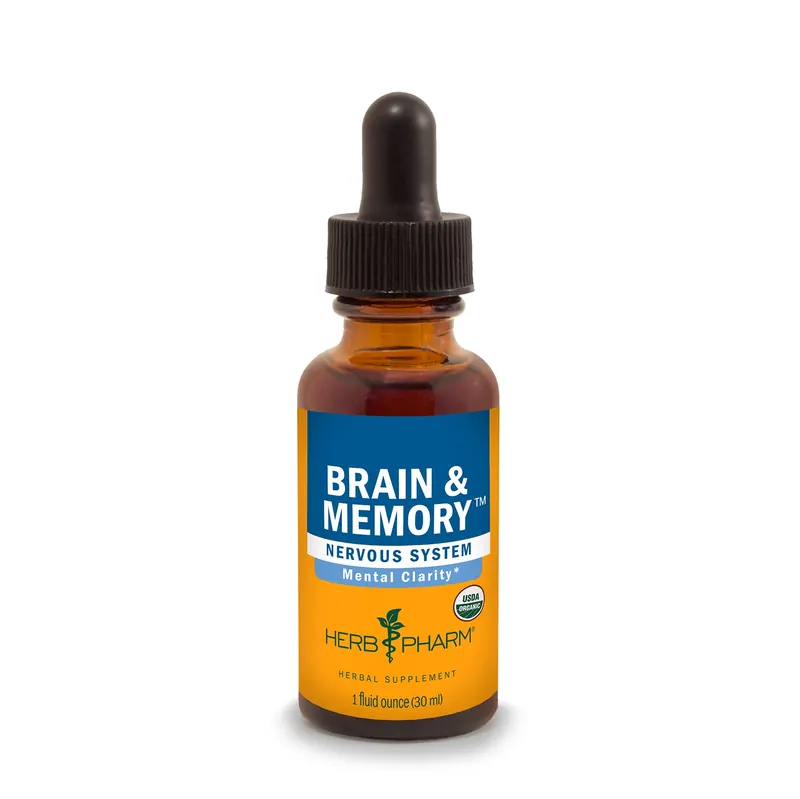
A one-ounce amber glass bottle with a black squeeze cap.
An orange label with a blue panel that says Brain & Memory, then Nervous System, then Mental Clarity with an asterisk.
Below that, the standard sentence the asterisk points to, about what the bottle isn't for.
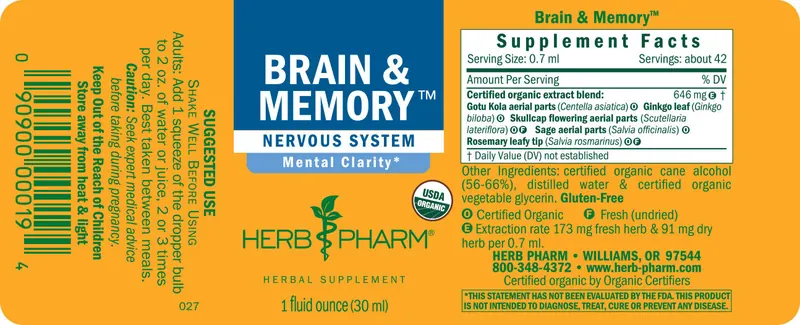
Turn it around and you get the panel that matters.
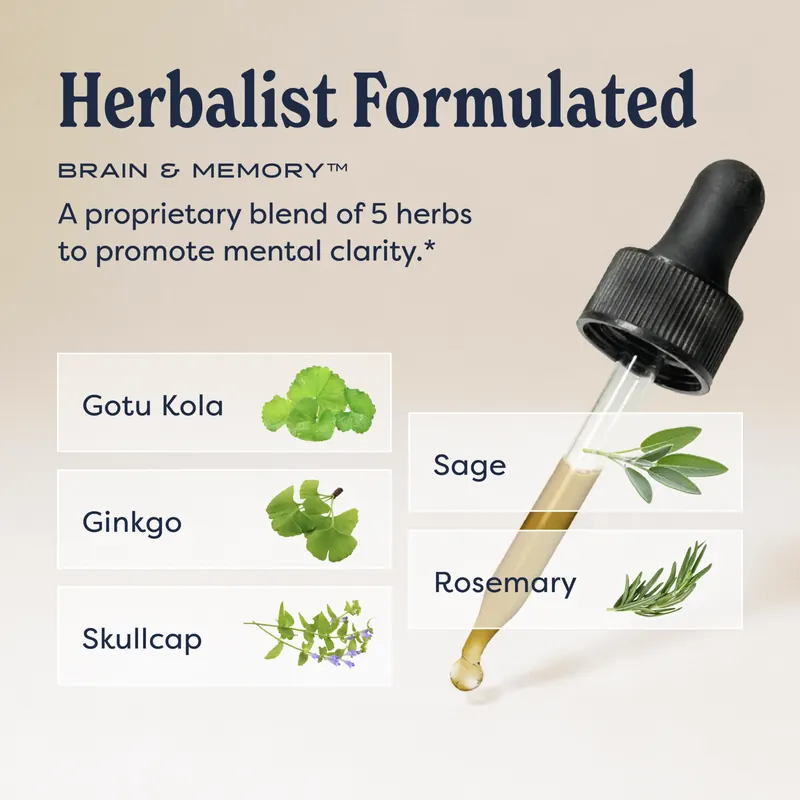
- Gotu kola, aerial parts
- Ginkgo, leaf
- Skullcap, flowering tops, fresh
- Sage, aerial parts
- Rosemary, leafy tips, fresh
All five are certified organic.
Under them, one number: 646 milligrams of "certified organic extract blend" per 0.7-milliliter squeeze.
Not one number per plant. One number for all five.
That's legal, and it's common.
It also means I can't tell you how much sage or ginkgo you're getting.
The plants are listed in order, so gotu kola is probably the biggest share and rosemary the smallest.
Read 646 as one number for five plants, because that's what it is.
Two more things off the label, and then one off the listing.
The label says the bottle comes from Herb Pharm in Williams, Oregon, and prints a phone number.
The seller's contact page gives an address in Central Point, Oregon, a different phone number for questions, an email, and office hours.
A company you can call during business hours is rarer in this category than it should be.
The listing describes it with a fashionable word for "brain booster" that I won't repeat.
The label doesn't use the word, and neither will I.
Nothing in this bottle has been shown to do what that word promises, and the same listing carries the asterisk sentence that says so.
The arithmeticWhat 646 Milligrams Actually Means
The label helps here more than most.
Next to the number, it prints an extraction rate.
Each 0.7-milliliter squeeze represents 173 milligrams of fresh herb, or 91 milligrams of dried herb.
Three squeezes a day is about 273 milligrams of dried herb, split five ways.
If you split it evenly, which nobody can promise, that's roughly fifty milligrams of each plant a day.
Hold onto that fifty, because every trial below used one plant at a time, in a measured amount, usually as a concentrated extract.
Not five plants in a squeeze.
That's not a scandal. It's what a five-herb liquid extract is.
But it's the fact that decides most of what follows, so let's go plant by plant.
Herb oneGotu Kola: Probably Most of the Bottle, and One Small Trial in Your Age Group
First on the label, so probably the biggest share.
Gotu kola is a creeping plant from wet ground across Asia, eaten as a salad green in some places.
It has one trial worth your time.
Twenty-eight healthy adults aged 62 to 67 took a water extract or a placebo for two months.
Only the highest dose, 750 milligrams a day, went with better working memory and feeling more alert. [1]
When all the trials were pooled, the picture thinned out.
No effect on cognitive test scores overall. People did say they felt more alert. [2]
Seven hundred and fifty milligrams a day, of an extract.
The whole squeeze is 91 milligrams of dried herb across five plants.
If gotu kola works at 750, the bottle isn't giving you 750.
There's a caution too. Rare reports of liver trouble have been linked to gotu kola products.
Unusual tiredness, dark urine, yellow skin or eyes: stop and call your doctor.
Herb twoGinkgo: The Famous One That Failed Its Big Trial
Second on the label, and the one everybody has heard of.

The biggest trial ever run on it gave 3,069 adults aged 72 to 96 a standardized extract, 120 milligrams twice a day, for a median of six years.
They declined at the same rate as the placebo group, in memory and in everything else measured. [3]
The National Institutes of Health says there's no conclusive evidence ginkgo helps with any health condition. [4]
That was 240 milligrams of concentrated extract a day.
This bottle gives you an unknown share of fifty-odd milligrams of leaf.
If the extract didn't do it in six years, the share won't in two weeks.
Ginkgo also thins the blood a little.
If you take anything that already does, or you have a procedure coming up, this is a conversation with your doctor before the first squeeze, not after.
Herb threeSkullcap: A Traditional Nerve Herb With a Mood Study, Not a Memory Study
Third on the label, and the one I had to look up.
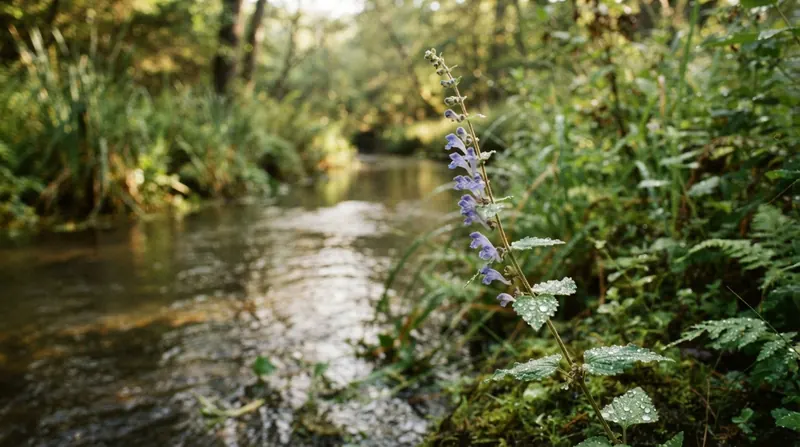
Skullcap is a slender plant of streambanks across North America with small blue-violet flowers.
Herbalists have used it for generations to settle the nerves, and that's the thing to know about it.
It's not in this bottle for memory. It's in it to take the edge off.
There's one decent study.
Forty-three healthy adults took 350 milligrams three times a day, or a placebo, for two weeks.
Their overall mood score improved from where it started, with no drop in energy or thinking.
Their score on a worry questionnaire didn't beat the placebo. [5]
Notice what that is. A mood study, in people who weren't especially worried to begin with.
Nobody has tested skullcap for memory or attention. Not once.
And notice the dose. A thousand and fifty milligrams a day, of the herb itself.
This bottle gives you a share of fifty.
One caution, and I'd rather you heard it from me.
Rare cases of liver injury have been reported with products containing skullcap, and in some of those the product turned out to be mislabeled or cut with a different plant.
That's an argument for buying from a company that prints its address, which this one does. It's not an argument for ignoring the cautions above.
Herb fourSage: The Kitchen Herb With the Best Single Day in the Data
Fourth on the label, and the one I'd actually stop on.
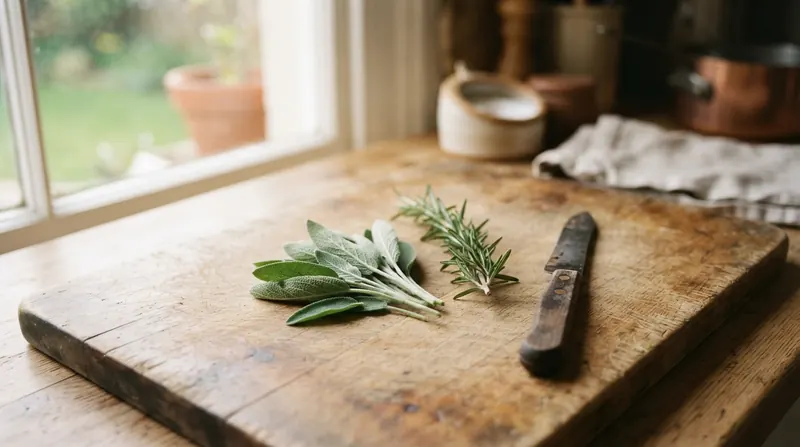
Sage. The gray-green leaf from the stuffing.
The FDA lists it among spices generally recognized as safe in food, and you've eaten it at Thanksgiving your whole life.
Here's the study.
Twenty healthy adults over 65, average age 73, came in five times.
Each time they took a placebo or one of four doses of a standardized sage extract, and did memory tests across the day.
On the 333-milligram day, their scores on a memory measure held up all day where the placebo group's faded.
Their attention was more accurate too.
Bigger doses helped less. Smaller ones helped less. [6]
In younger adults, single doses of 300 and 600 milligrams of dried leaf went with better mood, and the higher dose with better multitasking. [7]
That's the best single day any plant on this label has in people your age.
Now the honest part, which you can already see coming.
It was one dose, one day, twenty people.
It was a standardized extract in a capsule, not a share of a five-herb liquid extract.
Nobody has tested sage taken for months. Nobody has tested it mixed with the other four.
And the label doesn't say how much sage is in a squeeze.
So what the sage trial gives you is an honest maybe, and I'll take an honest maybe over a bold promise.
Two cautions.
Sage contains a compound called thujone, and very large amounts of sage oil have caused dizziness, a racing heart and seizures. Food amounts don't. A share of fifty milligrams doesn't come close.
And the label itself says to ask a doctor before taking this during pregnancy, which the sage monograph agrees with.
Herb fiveRosemary: A Pinch Helped, a Handful Hurt
Last on the label, so probably the smallest share, and the one you can taste.
Twenty-eight adults averaging 75 years old took a single dose of dried rosemary leaf.
At 750 milligrams, about a cooking pinch, their memory speed was faster than on placebo.
At 6,000 milligrams, a handful, it was slower. [8]
More wasn't better. That's the whole lesson of rosemary, and it's a good one to carry around.
It was still one dose, one afternoon, in 28 people.
Here's where that leaves the five.
One plant with a good single day in people your age. One with a small trial and a pooled result of nothing. One famous plant that failed its six-year trial. One nerve herb tested for mood, not memory. And one kitchen herb where a pinch helped and a handful hurt.
None at the dose it was tested at.
None tested together.
The bottle is real. The arithmetic is real. Keep both in your head at once.
The alcoholIt's an Alcohol Extract, and I'd Rather Say So Than Have You Find Out.
This is the part I'd rather say plainly.
The other ingredients are certified organic cane alcohol, at 56 to 66 percent, distilled water, and vegetable glycerin.
That's how liquid extracts have been made for a couple of centuries. The alcohol pulls the plant out and keeps it.
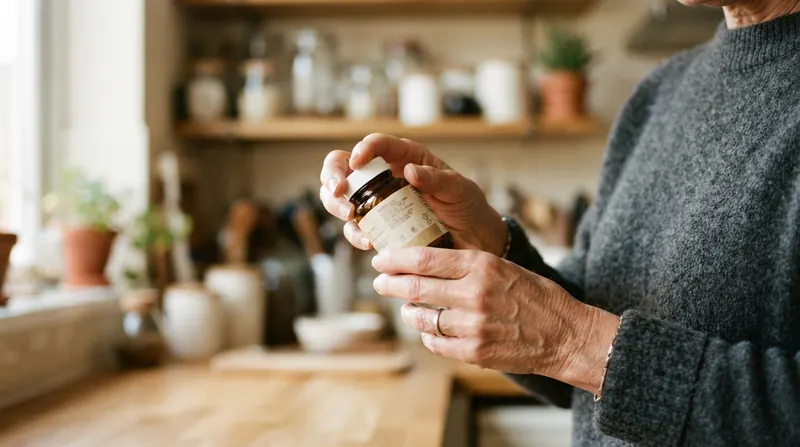
A squeeze is 0.7 milliliters. Roughly 0.4 of that is alcohol.
In two ounces of water it's a faint bite, not a drink. Three squeezes a day is about a teaspoon of alcohol spread across the day.
For most readers that's nothing.
For some it's everything, and they know who they are.
- If you avoid alcohol entirely, for any reason, this isn't your product. There are alcohol-free forms of some of these plants; this bottle isn't one.
- If you're in recovery, the same, and I wouldn't argue with you about the amount.
- If you take anything daily whose label mentions alcohol, ask the pharmacist. It takes two minutes.
- If you're pregnant or nursing, the label itself tells you to ask first.
And a small practical thing the label gets right: "best taken between meals."
On an empty-ish stomach the bitterness is sharper, so people put it in juice.
The label allows that. Kenneth's neighbors in the reviews used cranberry juice and coffee.
The reviewsTwenty-Three Reviews, Read All the Way Down
The seller's page shows 23 reviews with an average of 4.8.
Twenty gave five stars. Two gave four. One gave three.
Ninety-six percent said they'd recommend it.
I read every one.
Then I threw some out, and I'll tell you which and why.
I left out a nurse's review, because a health credential next to a product is a different kind of claim.
I left out two that compared the bottle with things I'm not allowed to compare it with.
I left out one that mentioned a benefit the label doesn't claim.
I left out three that were about the packaging and the speed of the box.
I left out two that described memory problems getting better, because I can't check that and neither can you.
And I left out one that was all capital-letter enthusiasm, because enthusiasm isn't evidence either.
What's left is the modest middle, which is where the truth usually lives.
These are real customers, quoted word for word from the seller's review system; the small photos beside them are illustrations, not the reviewers.

We are pleased with trying this out. Hoping that the four ounce is available soon. My wife and I are both using this. At 71 and 72, we figure 'what have we got to lose'?
I like to take this before teaching a class to help me feel focused and sharp.

I'm just now beginning to recognize some improvement in my memory (not enough to measure at this time), it's only been a week since I've been taking this supplement, as they do not produce immediate results, effects typically take several weeks with consistent daily use, but I'm hopeful and have experience great results with one other product; the 4 star is my belief that this supplement will soon show more positive effects, I've ordered more to continue, because one bottle won't do it

began using these drops in my mid-fifties... it helped minor issues .... stopped for awhile and noticed I needed to get back to it, that yes it had been helping more than I realized ... I put it in my coffee every morning... I quit coffee for a little while earlier this year so no memory formula drops (no coffee-no drops) ... I'm using Brain and Memory formula once again and it helps me quite a bit... it helps so much that I keep a spare bottle so I won't need to miss any more doses... learned my lesson at 75 years old

I think it works.
Read those the way I did.
Kristen S. takes it before teaching a class "to help me feel focused," which is a sentence about a routine, not a result.
Kim W. gave four stars after one week and said, in her own words, "not enough to measure."
Janice F. can't separate the drops from the coffee she put them in, and says so.
And Gerry S. wrote four words that are worth more to me than most paragraphs.
"I think it works" is what an honest person says about a small effect they can't prove. I trust it more than the five-star raves.
One footnote for Kenneth.
He hoped in March that the four-ounce bottle would come back.
It's on the seller's page now, at four times the size.
The likelier explanationWhy Mornings Feel Sharper Than Afternoons, and What No Bottle Changes About It
Here's what I'd tell Kenneth if he'd asked me instead of the internet.
Attention isn't a switch. It's a tank.
It's full in the morning and it drains across the day.
It drains faster after a heavy lunch, in a warm room, in a soft chair, with a page you've read before.

Rereading a paragraph at three o'clock is normal at every age.
A blank on a name is normal at every age.
Neither, on its own, means anything is wrong.
What refills the tank is dull and free.
- Seven hours of sleep, or as close as you can get. Nothing in a bottle beats it.
- A glass of water when you sit down to read. Most afternoon fog is thirst wearing a disguise.
- No coffee after two o'clock. The third cup fixes three o'clock and wrecks eleven.
- One thing at a time. The radio off while you read the manual.
- Ten minutes outside before the hard part of the day.

A habit you'll keep beats a bottle you'll forget.
That sentence is the only honest case I can make for a bottle like this.
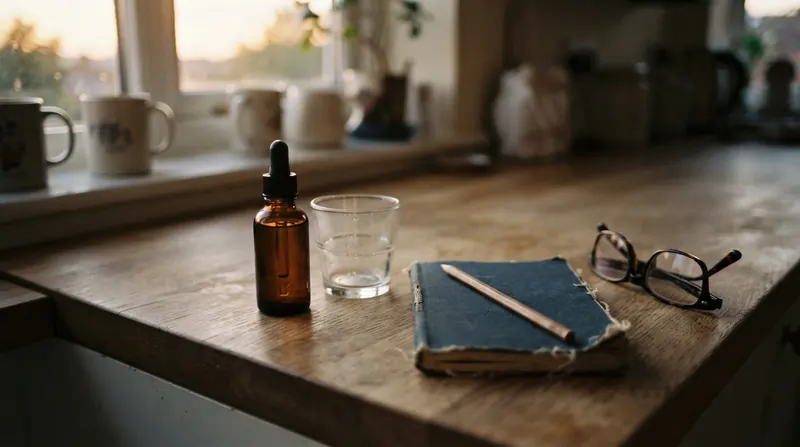
Not that the plants do the work. That the two-second gesture, done at the same time every day, becomes the hook you hang the rest on.
The water. The break. The page read once.
What it isn'tSix Things a Squeeze of This Won't Do
- It won't give you the afternoons you had at forty. Nothing in a bottle does.
- It won't act on any condition a doctor has named. It's a liquid extract of five kitchen and garden plants.
- It won't deliver the 333 milligrams of sage extract or the 750 of gotu kola the trials used. A share of fifty is not that.
- It won't tell you how much of any plant you're getting. The label prints one number for five.
- It won't be alcohol-free. It's more than half alcohol by volume, diluted in your glass.
- It won't come back for a refund if you dislike the taste. Thirty days for a credit or a replacement, with an authorization number first.
If that list annoys you, I'd rather you were annoyed now than after the box arrives.
The routineIf You Do Buy It, the Version That Makes Sense
Kenneth's question deserves a method, not just a list.
If you're going to spend the money, spend it as a test with a date on it.

- Shake the bottle. The label says so, and the plants settle.
- One squeeze into two ounces of water or juice. Not two squeezes. More wasn't better for rosemary, and nobody tested more for the rest.
- Between meals: mid-morning and mid-afternoon, and a third at bedtime only if the alcohol doesn't bother your sleep.
- Mark the calendar. At three a day the bottle lasts fourteen days. That's your test window, and it ends on a date you chose.
- Keep a two-line notebook. Every day, one line about what you were doing at three o'clock and one about how the page went. Two lines. Not a diary.
- No coffee after two, water on the table, radio off while you read. Do these for the same fourteen days, so the test is a real one.
- On day fourteen, read the notebook, not the bottle. Decide like a mechanic reads a gauge, not like a man who already paid.
Look at that list the way I do.
Five of the seven things are free.
The bottle is the one you'll pay for, and the notebook is the one that will tell you whether it was worth it.
And if the notebook says "I think it works," you'll be in good company. That's what Gerry wrote.
Two seconds a day is a small thing to keep. Keep the notebook with it, or you'll never know which of the two did the work.
Who it's forWho It Suits, and Who It Doesn't
This is worth a look if:
- You want the whole ingredient panel and a company you can phone, and you've now seen both.
- You like the idea of a two-second gesture with a glass of water instead of one more thing to swallow.
- You can hold two ideas at once: five real plants, one honest number, and doses well below the trials.
- A little alcohol in a glass of water doesn't trouble you or anything you take.
- You'll run it as a fourteen-day test with a notebook, not as a hope.
Give it a miss if:
- You want something that acts on a condition a doctor has named. This is a liquid extract of garden plants.
- You want to know how much sage or ginkgo you're getting. The label won't tell you, and neither can I.
- You avoid alcohol for any reason. This is more than half alcohol before you dilute it.
- You take anything that thins the blood, or you have a procedure coming up. Ginkgo is on the label. Ask first.
- You're pregnant or nursing. The label says ask a doctor, and so do I.
- You'd want your money back if you dislike it. The seller offers credit or replacement, not a refund.
Where it's soldFrom Southern Oregon, by UPS, With the Fine Print That Matters
The bottle is sold by Herb Pharm on its own website.
That's the only place this page links to.
The current price is shown there, not here.
The one-ounce bottle is also below the seller's free-shipping threshold on its own, so you'll either pay shipping or add something else to the cart.
Three things to know before you click, and I'd read all three.
First, shipping. The seller ships by UPS to the continental United States, Hawaii and Alaska.
It says it processes orders within three business days and that standard delivery takes three to eight days in total.
No international shipping is mentioned.
Second, contact. The seller publishes a street address in Central Point, Oregon, a phone number for orders, another for questions, an email, and office hours on weekdays, Pacific time.
That's more than most bottles sold on the internet will show you.
Third, returns. Read this twice.
If you're not satisfied, you can notify the seller within thirty days of purchase for a replacement or a full store credit.
You have to ask for a return authorization number first.
Damage is to be reported right away and shortages within seven days.
The policy says credit or replacement. It does not say refund. Decide accordingly.
See the current price on the seller's site
A certified-organic liquid extract of five herbs (gotu kola, ginkgo, skullcap, sage and rosemary) in cane alcohol, water and glycerin, taken as one squeeze of the dropper in two ounces of water, two or three times a day.
CHECK AVAILABILITYSold and shipped from Oregon by Herb Pharm, LLC · UPS to the continental US, Hawaii and Alaska; free ground shipping on orders over the seller's threshold · 30-day replacement or store credit with a return authorization number; the policy does not mention refunds
Everything in the bottle
| Ingredient | Amount per serving |
|---|---|
| Gotu kola (Centella asiatica), aerial parts | — (part of a 646 mg five-herb blend) |
| Ginkgo (Ginkgo biloba), leaf | — (part of a 646 mg five-herb blend) |
| Skullcap (Scutellaria lateriflora), flowering aerial parts | — (part of a 646 mg five-herb blend) |
| Sage (Salvia officinalis), aerial parts | — (part of a 646 mg five-herb blend) |
| Rosemary (Salvia rosmarinus), leafy tips | — (part of a 646 mg five-herb blend) |
Full details on each ingredient are in the guide linked at the bottom of this page.
The ingredient and advertising guide linked at the foot of this page goes through each of the five plants.
What it is. What the research does and doesn't show. What to be careful about. And which of our own headlines it does and doesn't support.
Print it and take it to the pharmacist if you take anything daily. It's written for that.
QuestionsWhat Readers Ask Me Before Their First Bottle
Questions readers ask
Is this medicine?
No. It's a dietary supplement, a liquid extract of five plants in alcohol, water and glycerin, made in Oregon. The label carries the standard sentence about what it isn't intended for, and the FDA hasn't evaluated the claims on the listing.
How much of each herb is in a squeeze?
The label doesn't say. It gives one figure, 646 milligrams of blend per 0.7-milliliter squeeze, and an extraction rate of 91 milligrams of dried herb per squeeze across all five plants. The plants are listed in order, so gotu kola is probably the largest share and rosemary the smallest.
Does it contain alcohol?
Yes. Certified organic cane alcohol at 56 to 66 percent, before you dilute it. A squeeze is 0.7 milliliters, so about 0.4 milliliters of alcohol goes into your two ounces of water. If you avoid alcohol for any reason, this isn't your product.
What does it taste like?
The seller says "somewhat bitter with a hint of rosemary." Reviewers put it in juice or coffee. The label allows water or juice.
How long does a bottle last?
About 42 squeezes. At three a day, fourteen days. At two a day, three weeks. The seller's "up to a three-week supply" assumes two.
Will it help my memory?
I can't tell you that, and you should be wary of any page that does. Sage has one good single-dose day in adults over 65, and gotu kola one small two-month trial, both at doses this bottle doesn't reach and doesn't disclose. What it reliably gives you is a two-second habit with a glass of water. Run it as a fourteen-day test with a notebook and decide from the notebook.
Can I take it alongside what I already take?
Ask your doctor or pharmacist and take the ingredient guide with you. Ginkgo can thin the blood, skullcap and gotu kola carry rare liver warnings, and the alcohol matters for some medicines. Two minutes at the pharmacy counter answers all of that.
Is it safe during pregnancy?
The label says to seek medical advice before taking it during pregnancy, and the European monograph on sage says the same. Ask first.
What if it arrives and I don't like it?
Notify the seller within thirty days of purchase and ask for a return authorization number; they offer a replacement or a full store credit. The policy doesn't mention refunds. Decide before you order, not after.
Is there a bigger bottle?
Yes. A four-ounce size is listed on the seller's page. Kenneth asked for it in March, and it's there now.
The short versionEverything Above, in Sixty Seconds
- A one-ounce amber squeeze-cap bottle from Herb Pharm in Oregon, with a street address, two phone numbers, an email and office hours in print.
- Five certified-organic plants: gotu kola, ginkgo, skullcap, sage and rosemary. One number for all five: 646 milligrams of blend per squeeze, or 91 milligrams of dried herb.
- One squeeze in two ounces of water or juice, two or three times a day, between meals. About 42 squeezes a bottle: fourteen days at three, three weeks at two.
- It's 56 to 66 percent alcohol before dilution. About 0.4 milliliters per squeeze. Not for anyone who avoids alcohol.
- Sage has the best single day in the data for people over 65, at 333 milligrams of extract. [6] Gotu kola has one small two-month trial at 750 milligrams. [1] A share of fifty milligrams is neither.
- Ginkgo failed the biggest trial ever run on it. [3] Skullcap has a mood study, not a memory study. [5] Rosemary: a pinch helped, a handful hurt. [8]
- Twenty-three reviews, average 4.8. The modest ones, "not enough to measure" and "I think it works," are the ones to trust.
- Ships by UPS within the US in three to eight days. Thirty days for a replacement or store credit, with an authorization number first. No refund in the policy.
The answerSo, Kenneth: What Have You Got to Lose?
The price of a bottle. Some shipping. A bitter sip two or three times a day. A little alcohol. Two weeks.
That's the whole list, and you can see all of it on the seller's page before you pay.
What you won't lose is anything that matters.
Not your mornings. Not your money past thirty days if it arrives broken. Not your sleep, if you keep the last squeeze away from bedtime.
And what you might gain is small and honest.
One plant with a good day in people your age. A company you can phone. A two-second gesture that, with a glass of water and a notebook, might make three o'clock a little less foggy for reasons that have nothing to do with the plants.
If that's enough, it's enough. If it isn't, you've lost nothing by reading this far.
Check the current price and availability
A certified-organic liquid extract of five herbs (gotu kola, ginkgo, skullcap, sage and rosemary) in cane alcohol, water and glycerin, taken as one squeeze of the dropper in two ounces of water, two or three times a day.
CHECK AVAILABILITYSold and shipped from Oregon by Herb Pharm, LLC · UPS to the continental US, Hawaii and Alaska; free ground shipping on orders over the seller's threshold · 30-day replacement or store credit with a return authorization number; the policy does not mention refunds
P.S. If you take one thing from this page, take the number. Six hundred and forty-six milligrams for five plants, 91 of dried herb per squeeze, and every trial worth quoting used one plant at a time at several times that. That's the most useful fact about this bottle, and it's on the side of the label, not the front.
P.P.S. If the afternoon fog has been with you for a year, and it's there in the morning too, talk to your doctor before you buy anything. A squeeze of herbs in water is a small habit. It was never going to answer a question a doctor answers in fifteen minutes.
P.P.P.S. And if you do order it, keep it next to the coffee maker, not in a cupboard, and put the notebook next to it. The whole case for this bottle is the routine around it, and a bottle behind the cereal is just a bottle.